Sludge in SC: Who’s Spreading It
Sludge in South Carolina: Who's Spreading It
Part 1: Terra Renewal and Denali
Post 1 of 13: Who is spreading the sludge
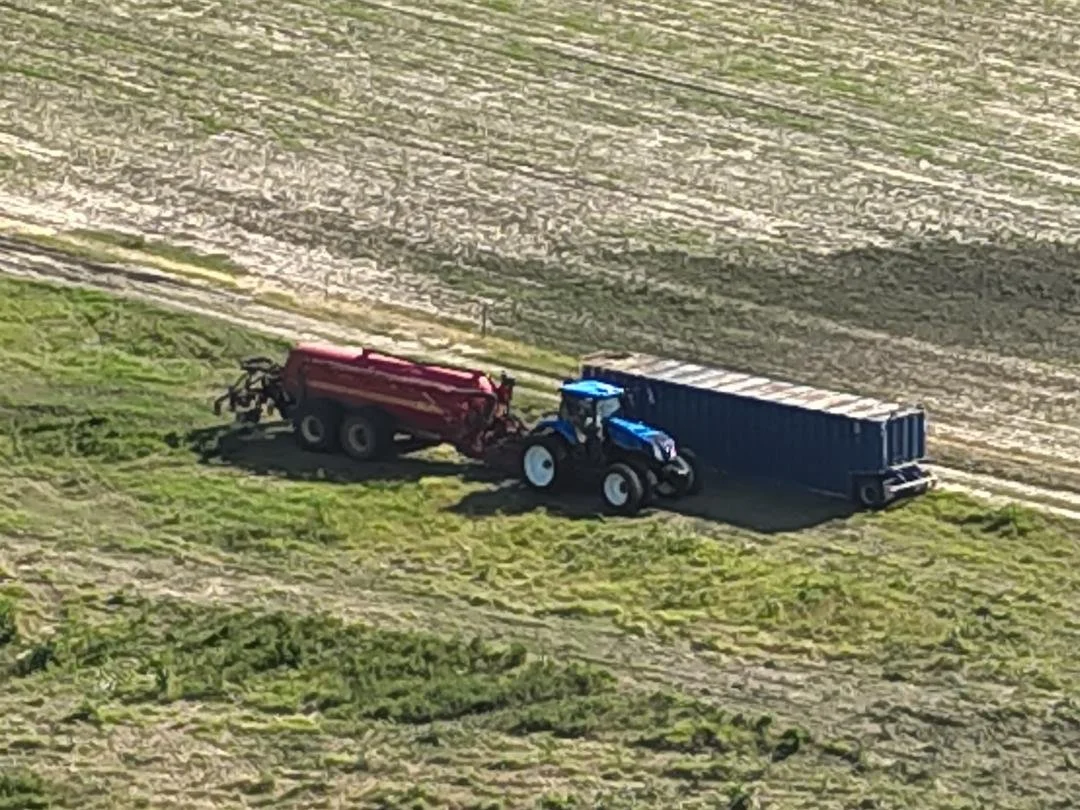
Most of the sludge going on fields in the Pee Dee right now is spread by one company. Terra Renewal Services.
Terra Renewal is not from here. It is owned by Denali Water Solutions out of Russellville, Arkansas. Denali is owned by TPG, a private equity firm out of California.
Per SCDES records Terra Renewal is permitted to spread on:
- 122 sites
- 9,358 acres
- Chesterfield, Darlington, Kershaw and Marlboro counties
Consultants found over 80 percent of the sludge they spread here from 2020 to 2024 came from other states.
Their own SC filings list Denali as the facility at Denali's Arkansas headquarters.
Next: where this company came from.
Sources
- SCDES Enforcement Report May 2025, The State
Post 2 of 13: Where it came from
Terra Renewal started in Arkansas in 1995.
- 1995 Terra Renewal founded in Arkansas
- 2013 Sold to Darling Ingredients for $120 million
- 2014 Denali Water Solutions formed as a spin off from Terra Renewal
- 2018 Denali's holding company buys Terra Renewal back for about $80 million
- 2020 TPG private equity buys Denali
Same business. Same people. New names on the trucks.
The people who built Denali got early money from the Firmament Group, started by the family of Mack McLarty. He was Bill Clinton's first White House chief of staff.
Sources
- Denali company website, Darling SEC filing, Arkansas Democrat-Gazette
Post 3 of 13: The men running it
Andy McNeill
- CEO of Terra Renewal before 2013
- Founded Denali
- Now chairman of the board
- Also a partner at McLarty Capital Partners
Todd Mathes
- Chief operations officer of Terra Renewal for over 10 years
- Senior VP at Darling Ingredients
- CEO of Denali since 2023
These two have run this business together for about 20 years. Through every sale and every name change.
McNeill has said his company is not creating the waste. He is right. They are just bringing it here.
Sources
- Denali press release Feb 2023, Arkansas Business, Waste Today
Post 4 of 13: Their record
- Arizona and California. EPA fined Denali $610,000 in 2024 for over applying sludge on farm fields.
- Missouri. State ordered Denali to stop spreading meat plant waste in 2023. Neighbors sued.
- Arkansas. Fort Smith residents filed a class action over the smell from a Denali waste lagoon.
- Maryland. Wicomico County residents sued over a Denali poultry waste tank.
- Tennessee. State cited Denali for permit violations.
- South Carolina. SCDES fined Terra Renewal $16,000 in 2025 for spreading on land that was not permitted.
$16,000 on a 9,358 acre operation.
Now they want to spread on 450 more acres in Darlington County. SCDES says it cannot deny a permit because of past violations.
Sources
- EPA, Missouri DNR, SCDES Consent Order 25-020-W, WBOC, The State
Post 5 of 13: What they don't test for
Here is what I know for a fact.
- Reporters in Tennessee found Denali does not test for PFAS.
- At a hearing in Texas a Denali rep said they do not test well water.
- A Denali manager in Alabama said heavy testing is not needed because chicken sludge is mostly water.
My farm tested up to 55 ppb PFOS in the soil. My family's wells tested near 4,800 ppt. That came from sludge.
Nobody tested it before it went on my land. Nobody is testing it now before it goes on yours.
South Carolina should require PFAS testing before any sludge goes on any field. If they won't test it, it should not be spread.
Call SCDES. Call your county council. Ask them one question. Has this sludge been tested for PFAS.
Sources
- Tennessee Lookout, KETK, Decatur Daily
Post 6 of 13: What Arkansas found
Before Denali, there was Terra Renewal. Same company spreading sludge in the Pee Dee right now.
Here is what Arkansas state inspectors found at Terra Renewal sites in 2009.
Near Redfield
- Waste spread within 100 feet of a stream
- No buffer zones set up like the permit required
- Soil tests not sent to the state before spreading
Another site
- Nitrogen limits appear exceeded on several fields
- Waste injected as close as 15 feet from a creek
- Waste spread when heavy rain was coming
Storage site in Hensley
- Permit allowed one storage tank. Inspectors found five.
- No containment berm
- Spills around the tanks with nothing to catch them
That was 17 years ago. Since then:
- EPA fine in Arizona and California
- Ordered to stop in Missouri
- Ordered to stop at an old coal mine in Alabama
- Fined in South Carolina for spreading on land that was not permitted
Same company. Same problems. Now they want 450 more acres in Darlington County.
Ask SCDES why a company with this record gets more permits and no PFAS testing.
Sources
- Arkansas Dept. of Environmental Quality inspection reports, 2009
Post 7 of 13: How the deal works
A few more things I found about Denali.
They pay the landowner by the gallon. Court papers in an Arkansas lawsuit say the landowner storing Denali's waste gets paid for every gallon put in the lagoon. The more waste, the more money.
They admitted the smell. In a 2019 letter Denali admitted the odor in Fort Smith, Arkansas was coming from its lagoon. A lawsuit says they promised to stop there in 2019 and kept dumping anyway. Residents are asking for punitive damages.
They leave when a state cracks down. Denali stopped spreading in Arizona and California in 2024. Then EPA announced the $610,000 fine.
It is not always about fertilizer. In Alabama they sprayed chicken plant waste on an old coal mine. Nothing was growing there.
Nobody has tested it for PFAS. I found no court case where anyone tested their sludge for PFAS. Nobody checked before it went on the ground here either.
So I ask SCDES:
- Who is getting paid by the gallon in the Pee Dee
- How much is going on each field
- Has any of it been tested for PFAS
Sources
- Spinas v. Denali, Crawford County Circuit Court, Arkansas. Arkansas Times. EPA. AL.com
Post 8 of 13: What's in the tanker
Terra Renewal spread about 11,000 gallons of chicken plant sludge per acre on average in 2025. That is over 40 tons of liquid on every acre.
Poultry plant sludge is 85 to 95 percent water. The rest is the fat, blood, protein and solids skimmed off the plant's wastewater.
Where does it come from? Take the Tyson chicken plant in Monroe NC.
- It runs on city water. EPA testing found two PFAS chemicals in Monroe's tap water.
- Tyson has no discharge permit of its own. Its wastewater goes to the city plant.
- The city plant has no PFAS limits in its permit. It empties into Richardson Creek, which runs to the Rocky River and into the Pee Dee.
North Carolina tested 37 wastewater plants. Every one had PFAS. The state did not name the plants, and it did not test poultry plant sludge.
So nobody knows what is in these loads. Not the state. Not the farmer. Not the people downstream.
If SCDES ever tests this sludge, it needs to test the whole load as it goes on the field, solids and liquid together. Before it is spread, not after.
Sources
- Terra Renewal 2025 application reports, NC DEQ PFAS study 2026, NC DEQ permit records, EPA drinking water testing
Part 2: Synagro and Right to Farm
Post 9 of 13: The biggest one
Terra Renewal is not the only sludge company in South Carolina. The biggest one in the country is here too. Synagro.
Synagro is out of Baltimore. It calls itself the largest biosolids company in the United States.
Who has owned it
- 2007 Carlyle Group
- 2013 Went bankrupt and was sold to EQT, a private equity firm from Sweden
- 2020 Goldman Sachs
News reports say Goldman has now put it up for sale.
Who runs it
- Bob Preston, CEO and chairman since 2018
- Pam Racey, chief commercial officer, at Synagro about 35 years
- Kip Cleverley, chief sustainability officer
In South Carolina
- Synagro opened a sludge compost plant in Holly Hill in Orangeburg County in 2024. It takes sludge from the Charleston and Columbia markets.
- WSOC reported Synagro spreads Charlotte sludge on farmland in North and South Carolina, including Chester County.
Next: how this company does business.
Sources
- Synagro website, Infralogic, Philadelphia Inquirer, WSOC
Post 10 of 13: Detroit
In 2007 Detroit City Council voted 5 to 4 to give Synagro a sludge contract worth $47 million a year for 20 years.
Here is what came out after.
- Jim Rosendall, Synagro's Michigan representative, pleaded guilty to bribery conspiracy. He served 11 months in prison.
- Councilwoman Monica Conyers pleaded guilty to taking bribes for her vote. Hers was the deciding vote.
- Rayford Jackson, who worked for Synagro, also pleaded guilty.
- Rosendall's plea said $25,000 was spent after the vote to keep council members from backing out.
The contract was cancelled.
This is the company asking cities and farmers to trust them on what is in their sludge.
Sources
- NBC News, Associated Press, Washington Times, Michigan Public Radio
Post 11 of 13: Their record
- Rhode Island. EPA fined Synagro $373,660 in 2021 over its sludge incinerator in Woonsocket. The state settled pollution violations at the same plant for $120,000 in 2022. Neighbors filed a class action over the smell.
- California. In 2022 a fire burned for months in Synagro's 80 acre sludge compost pit near Hinkley. Inspectors had logged 39 violations there since 2020 with no enforcement. After the fire the county ordered them to stop taking sludge until they met their permit. Residents sued Synagro and Goldman Sachs.
- New York. The Attorney General sued Synagro over the smell from its Bronx sludge plant.
- Maryland. The state proposed a $27,000 penalty after sewage odor from Synagro's Baltimore plant got into nearby neighborhoods.
- Pennsylvania. Residents in York County and Upper Mount Bethel sued over sludge spread next to their homes.
Different states. Same story. Neighbors complain for years before anybody acts.
Sources
- EPA, Violation Tracker, Victorville Daily Press, NY Attorney General, Maryland Dept. of the Environment, Public Justice
Post 12 of 13: PFAS
Texas
- Five farm families in Johnson County say Synagro sludge spread on a neighbor's farm got into their water and killed their livestock.
- A county investigator tested Synagro's fertilizer and found 27 kinds of PFAS.
- Synagro denies it.
- The county declared a state of emergency.
- Fort Worth ended its contract with Synagro.
- The federal case was filed in February 2025. In February 2026 the judge closed it for now without a ruling.
South Carolina
- When Synagro opened in Holly Hill, its sustainability officer told reporters the sludge coming in would not be industrially impacted by PFAS.
- I could not find any PFAS test results they have made public.
- Over 200 Holly Hill residents signed a petition over the smell.
- SCDES said it found no permit violations.
- Synagro blamed cement plants, a wood plant and chicken plants nearby.
- Orangeburg County proposed a moratorium on new sludge compost plants.
If they say it is clean, show us the test results.
Sources
- Texas A&M AgriLife, Justia, Napoli Shkolnik, Waste Dive, WIS, Live 5 News
Post 13 of 13: Why your county can't stop it
People ask me why Darlington County doesn't just pass its own rule. Here is why.
- South Carolina's Right to Farm law counts fertilizing and putting "chemicals, compounds, or substances" on soil as farming.
- Any county rule on farming that is not identical to state law is void.
- The legislature wrote in two exceptions. New hog farms and big new slaughterhouses.
- There is no exception for sludge.
So a county cannot make its own PFAS testing rule for sludge. Counties can still use zoning to decide where new plants go. That is what Orangeburg County did.
Sludge companies use these laws in court. In 2015 the Pennsylvania Supreme Court ruled sludge spreading is normal farming under that state's Right to Farm law. Synagro won. The lawyer who won it for them is defending Synagro in Texas now.
I am a farmer. I believe in Right to Farm. It was written to protect farmers. Sludge companies are using it.
The legislature carved out hogs and slaughterhouses. They can carve out untested sludge.
Call your state House member and state Senator. Ask them to file a bill requiring PFAS testing before any sludge goes on any field in South Carolina.
Sources
- SC Code Title 46 Chapter 45, Beveridge & Diamond, WIS